
Brand Governance vs Brand Guidelines
Brand guidelines are the rules. Brand governance is enforcing them on every piece of content, automatically, before it ships.
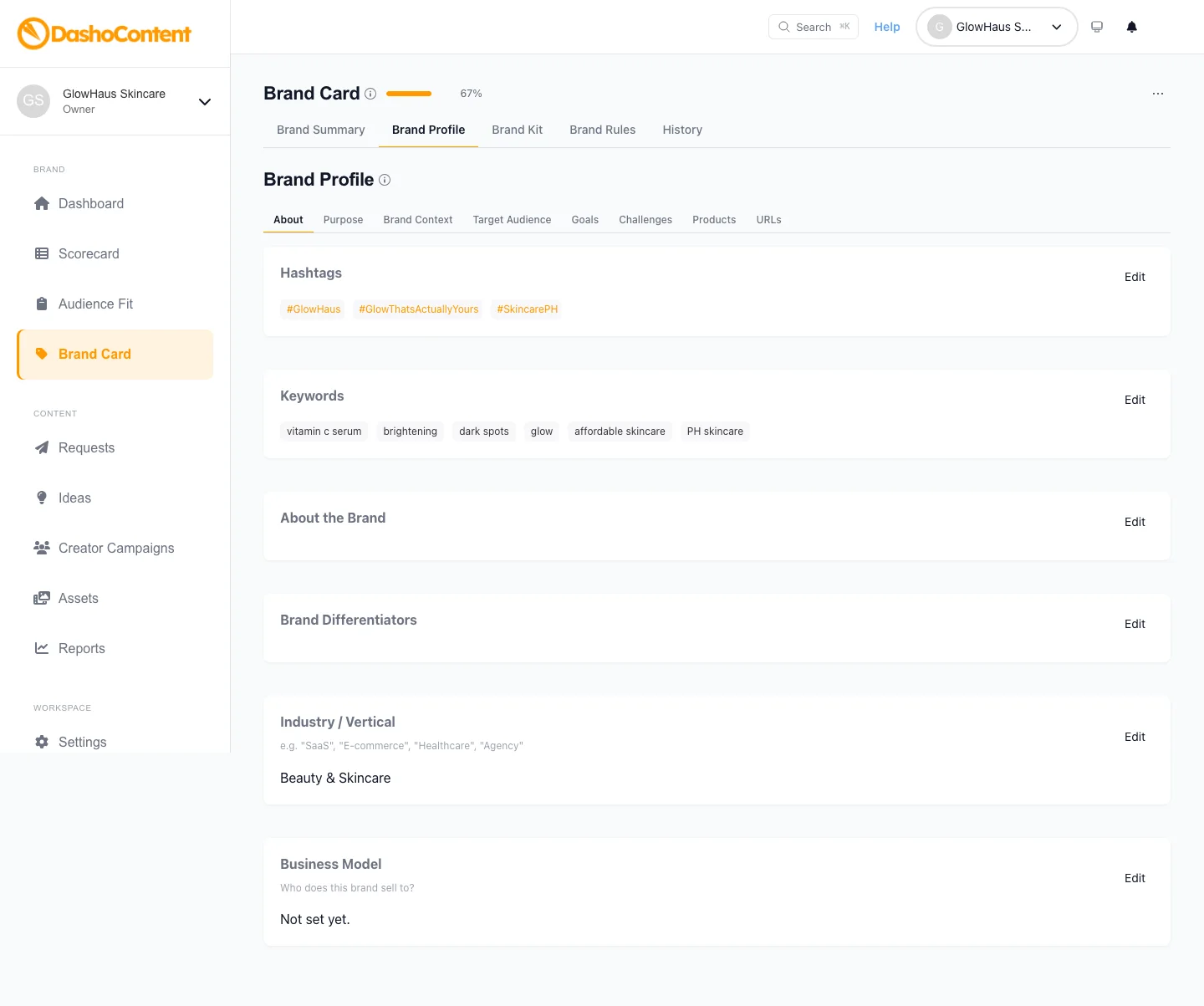
Brand governance vs brand guidelines comes down to this: guidelines tell people what good looks like, while governance checks whether each draft actually meets that standard before approval. If your team already has a 20 to 80 page brand doc and still ships off-brand content, the gap is usually enforcement, not intent.
What brand guidelines do
Brand guidelines are the reference. They define voice, tone, terminology, visual rules, legal constraints, and common do and don't examples. Most teams store them in a PDF, wiki, or slide deck.
That matters. Without guidelines, every writer and reviewer makes their own call. You get drift across regions, product lines, agencies, and channels. The problem is that a document only helps when people read it, remember it, and apply it under deadline.
What brand governance adds
Brand governance turns those rules into an operating system for content. Instead of asking reviewers to manually catch every issue, governance checks drafts against defined brand rules before human review.
In practice, that means your Brand Card and Content Scorecard become enforceable standards. A draft can be scored for voice fit, required claims, banned phrasing, reading level, product naming, and channel-specific rules. Reviewers start with a report, not a blank slate.
The clearest difference
Guidelines are static. Governance is active. Guidelines describe the brand. Governance measures content against the brand, every time, at scale.
- Guidelines: reference document
- Governance: rule-based review process
- Guidelines: depends on memory and training
- Governance: depends on defined checks and scores
- Guidelines: hard to apply consistently across 100 or 1,000 drafts
- Governance: built to apply the same standard across volume
Why teams have guidelines but still publish off-brand content
Most organizations do have guidelines. Fewer enforce them consistently. That is not because the team does not care. It is because manual review breaks down under volume, speed, and team sprawl.
A reviewer might know the brand well, but they cannot reliably inspect every line across web pages, emails, ads, case studies, partner copy, and regional variants. Once output rises from 10 pieces a month to 100, consistency usually falls unless checks are built into the workflow.
When guidelines are enough and when governance matters
Guidelines may be enough for small teams with one or two experienced creators, low content volume, and a tight approval loop. If the same people write and review everything, a static document can carry more weight.
Governance matters when content is produced by many hands: internal teams, freelancers, agencies, field marketers, or product marketers across markets. The more contributors you have, the less you can rely on memory. You need repeatable checks.
A practical way to think about it
Use guidelines to define the standard. Use governance to enforce the standard. One sets the rules. The other makes those rules usable in production.
That is the core of brand governance vs brand guidelines. If your team is seeing inconsistent tone, naming errors, missing disclaimers, or long review cycles, you likely do not need another brand document. You need a way to score drafts against the one you already have.
Are brand guidelines the same as brand governance?
No. Brand guidelines are the documented rules. Brand governance is the process and system that applies those rules to real content before it is approved or published.
Can you have brand governance without brand guidelines?
Usually no. Governance needs a source of truth. If the rules are vague or undocumented, there is nothing consistent to score against.
Why is brand governance more useful at scale?
Because scale adds contributors, channels, and deadlines. Manual review gets less consistent as volume rises. Governance applies the same checks across every draft, which reduces drift and review time.
The same system runs underneath everything
Brand Card
Voice, tone, and rules defined once per brand — the source of truth every draft is measured against.
Content Scorecard
Every draft scored for brand compliance before a human reviews it — catch drift before it ships.
Governed workspaces
One workspace per brand: briefs, drafts, assets, and approvals in a single tracked place.
Approvals that move
A defined brief → draft → review → approve flow, so sign-off takes minutes, not days.
Have us run it for you
Done-for-you content operations, governed against your Brand Card.
Explore Managed Services →Run it yourself
Self-serve governed workspaces for agencies and lean teams.
Explore the platform →Keep every brand on-message
Start free and run it yourself, or have us run it for you.