
What Is a Brand Card?
A Brand Card codifies a brand's voice, tone, and rules in one place — the single source of truth every piece of content is scored against.
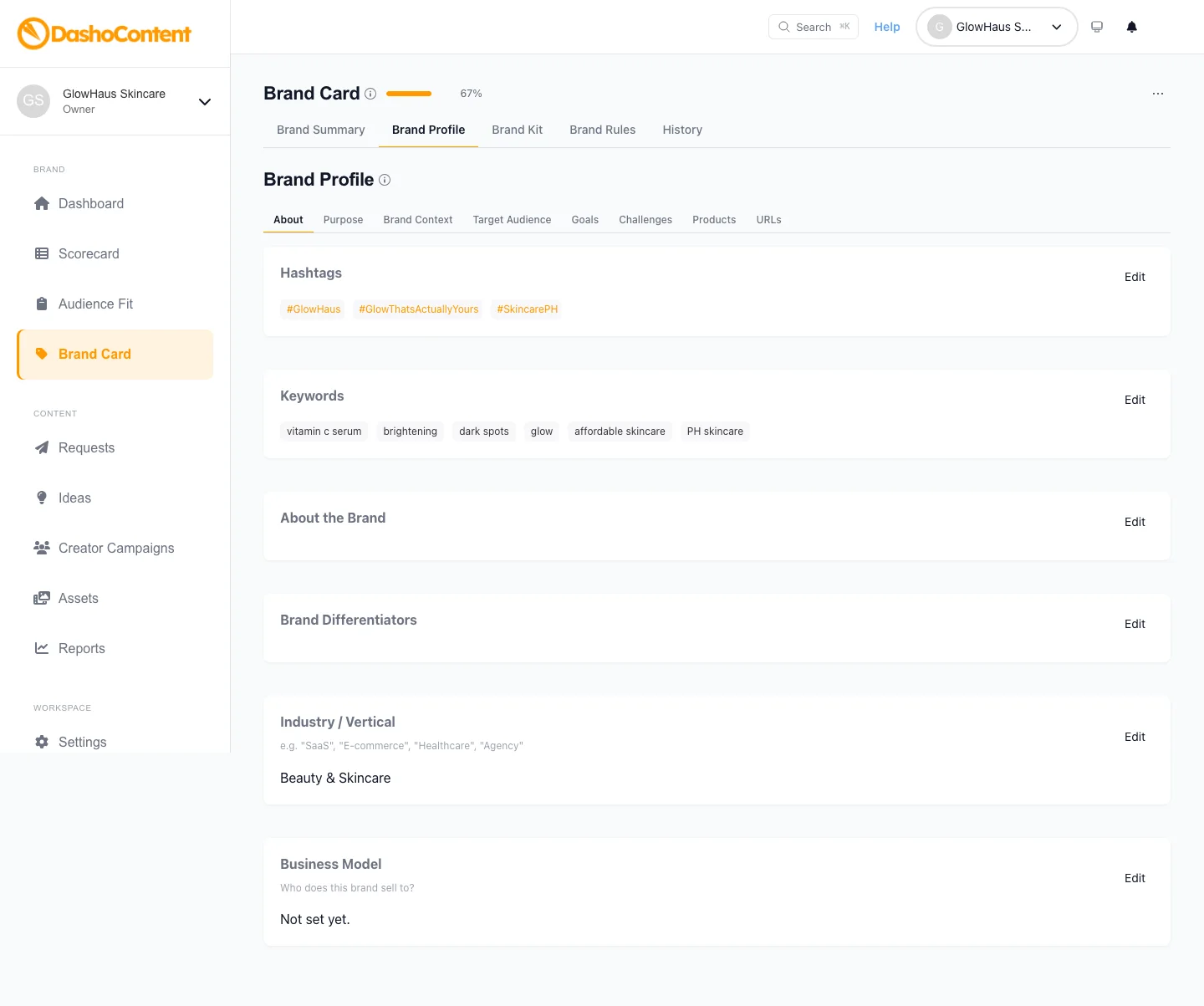
A brand card is a codified source of truth for how your brand should sound, what it should say, and what it should avoid. It turns brand guidance into clear rules that drafts can be scored against, so reviewers check content against the same standard every time.
Core definition
If you are asking what is a brand card, the short answer is this: it is a structured record of your brand voice, tone, messaging rules, claims, terminology, and exclusions. It is built for use in content operations, not only for reference.
Unlike a loose style note or a slide deck, a brand card is specific enough to support evaluation. A team can use it to judge whether a draft matches the brand before legal, compliance, or final editorial review.
What a brand card includes
Most brand cards include the rules a writer or reviewer needs to make repeatable decisions. The exact fields vary by company, but the goal stays the same: reduce ambiguity and define what good looks like.
- Voice attributes, such as direct, technical, formal, or conversational
- Tone guidance by context, channel, audience, or funnel stage
- Approved positioning, core messages, and proof points
- Preferred terms, banned terms, naming conventions, and product language
- Claims rules, disclaimers, and other content constraints
- Examples of on-brand and off-brand copy
How it differs from a brand guidelines PDF
A static brand-guidelines PDF is often broad, visual, and hard to apply line by line. It may explain logo use, color, layout, and general tone, but it usually leaves room for interpretation when someone is writing a draft under deadline.
A brand card is more operational. It breaks brand guidance into usable rules and examples, then keeps those rules close to the drafting and review process. That matters when multiple writers, agencies, or subject matter experts all produce content for the same brand.
How a brand card is used
In governance-first workflows, the brand card becomes the reference standard for content review. A Content Scorecard checks a draft against the card's rules and returns a score or structured assessment before a human reviewer signs off.
This gives your team a consistent first pass. Instead of relying on memory or personal preference, reviewers can compare content to defined criteria. That helps reduce drift across pages, campaigns, and regions over time.
Who creates a brand card
A brand card is usually created by the people who own brand standards and content quality. That often includes brand, content, communications, product marketing, and compliance or legal when claims matter.
In practice, one person or small working group usually drafts the card, then stakeholders review and approve it. The strongest version comes from existing guidance, real content examples, and a clear decision on what rules are mandatory versus preferred.
Why teams use one
Teams use a brand card to make brand governance measurable. It gives writers clearer direction, gives reviewers shared criteria, and makes content quality easier to audit. For organizations with high output, even a small reduction in revision cycles can save meaningful time.
It also supports consistency across channels. When your website, lifecycle emails, sales collateral, and thought leadership all follow the same codified rules, your brand sounds more like one company and less like 12 separate authors.
Is a brand card the same as a style guide?
No. A style guide usually covers writing conventions such as grammar, punctuation, and formatting. A brand card focuses on brand-specific voice, messaging, terminology, and rules that content can be scored against.
Can a small team use a brand card?
Yes. A brand card is useful even for teams of 3 to 10 people because it reduces subjective review and keeps contractors, founders, and marketers aligned. It does not need to be long to be usable; it needs to be clear.
The same system runs underneath everything
Brand Card
Voice, tone, and rules defined once per brand — the source of truth every draft is measured against.
Content Scorecard
Every draft scored for brand compliance before a human reviews it — catch drift before it ships.
Governed workspaces
One workspace per brand: briefs, drafts, assets, and approvals in a single tracked place.
Approvals that move
A defined brief → draft → review → approve flow, so sign-off takes minutes, not days.
Have us run it for you
Done-for-you content operations, governed against your Brand Card.
Explore Managed Services →Run it yourself
Self-serve governed workspaces for agencies and lean teams.
Explore the platform →Keep every brand on-message
Start free and run it yourself, or have us run it for you.