
The Practical Definition of Content Ops
Content ops is the system behind consistent, scalable content: the roles, workflows, and governance that keep quality high as output grows.
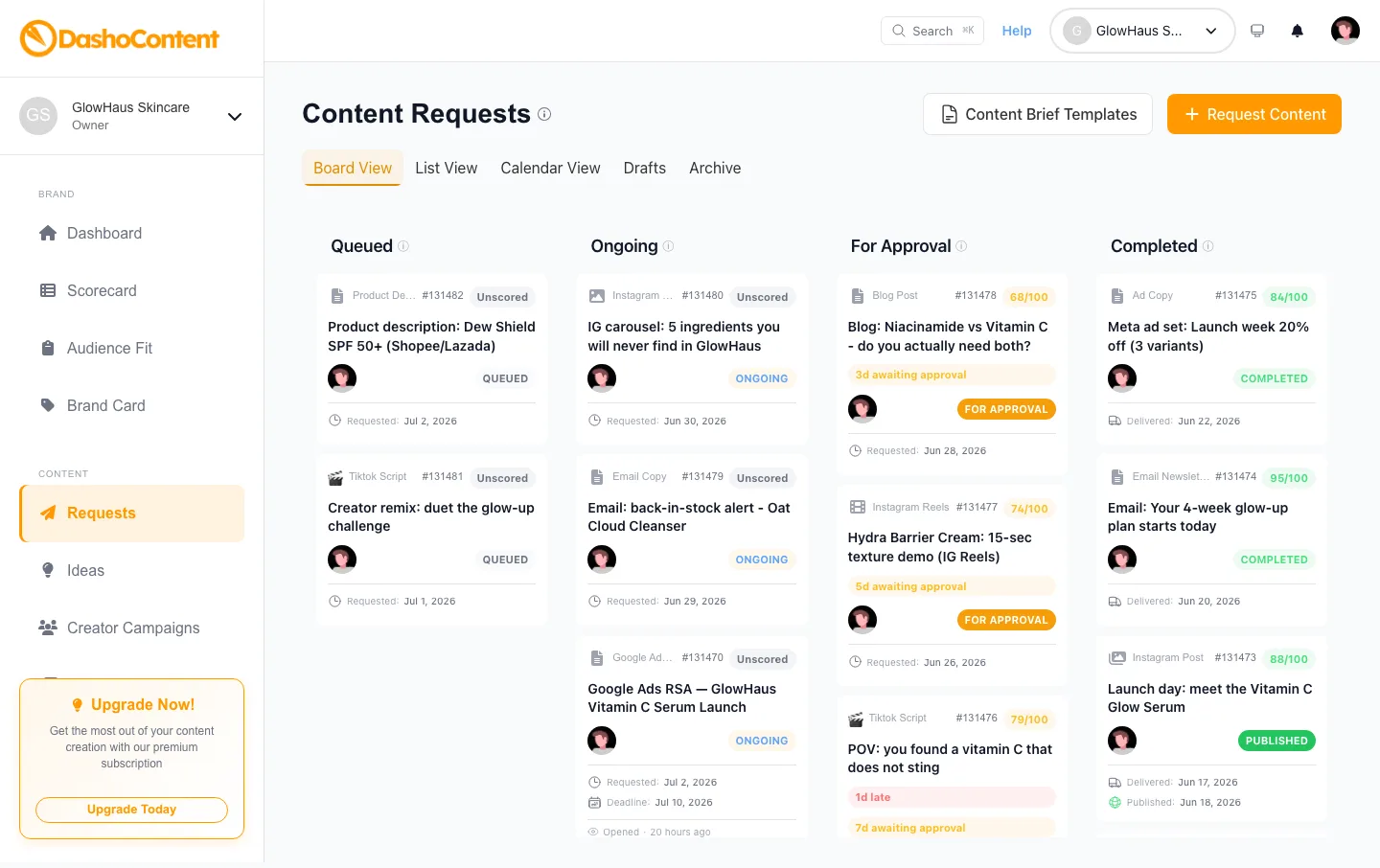
Content ops is the system a team uses to plan, create, review, approve, publish, and maintain content with consistent quality. It covers roles, workflows, governance, and tools so content does not depend on one person’s memory or last-minute edits, even when output volume increases.
What content ops includes
If you are asking what is content ops, think of the operating model behind content. It defines who does what, in what order, with which standards, and how work moves from brief to published asset.
In practice, content ops usually includes intake, planning, briefs, production, review, approvals, publishing, distribution, updates, and reporting. It also includes the rules that keep tone, claims, formatting, and compliance consistent across channels.
The three core parts
- Production: briefs, drafts, editing, design inputs, approval steps, and handoffs.
- Governance: brand rules, voice guidance, legal or compliance checks, and review criteria.
- Distribution: CMS publishing, email sends, social scheduling, localization, and performance tracking.
Teams may split these parts across different people or combine them in one role. The point is the same. Work is documented, repeatable, and measurable.
How content ops differs from ad-hoc content
Ad-hoc content usually happens through DMs, scattered docs, and memory. One person knows the brand voice. Another knows the approval path. Deadlines slip when either person is out or overloaded.
Content ops reduces that fragility. The workflow is clear. Review standards are visible. Rework drops because teams catch problems earlier, before legal review, executive review, or publish day.
Why lean marketing teams need it
Small teams feel content problems first. When 3 to 10 people are covering strategy, writing, approvals, and distribution, even minor confusion creates delays. A missing brief can cost days. A vague review process can create three extra revision rounds.
Content ops helps lean teams ship more with fewer surprises. It gives freelancers, agencies, and new hires a clear way to contribute without constant hand-holding. It also makes quality less dependent on your most experienced editor being available.
Where governance fits
Governance is the part many teams skip until inconsistency becomes expensive. It sets the rules for voice, positioning, terminology, claims, required elements, and channel-specific standards. Without it, scale usually increases variance.
A governance layer works best before human review. For example, a Brand Card can hold the brand’s rules, and a Content Scorecard can score each draft against those rules before an editor steps in. That gives reviewers a clearer starting point and makes feedback more objective.
What good content ops looks like
Good content ops is boring in the best way. Requests are easy to submit. Priorities are visible. Templates exist. Review steps are finite. People know when a draft is ready, who approves it, and what quality standard it must meet.
It does not require a large team or a complex stack. A lean setup can start with documented roles, simple briefs, one approval path, and one shared scorecard. The goal is consistency you can maintain, not process for its own sake.
Is content ops only for large enterprise teams?
No. Large teams often formalize it first, but smaller teams usually benefit sooner. When a few people produce a lot of content, clear workflows and review rules prevent bottlenecks and avoidable rework.
What is the difference between content strategy and content ops?
Content strategy decides what to say, to whom, and why. Content ops decides how that work gets done consistently. Strategy sets direction. Operations makes production, governance, and publishing repeatable.
How do you start building content ops?
Start with one workflow. Define roles, required inputs, review criteria, and approval steps. Then document your brand rules in a Brand Card and use a Content Scorecard so every draft is checked against the same standard before human review.
The same system runs underneath everything
Brand Card
Voice, tone, and rules defined once per brand — the source of truth every draft is measured against.
Content Scorecard
Every draft scored for brand compliance before a human reviews it — catch drift before it ships.
Governed workspaces
One workspace per brand: briefs, drafts, assets, and approvals in a single tracked place.
Approvals that move
A defined brief → draft → review → approve flow, so sign-off takes minutes, not days.
Have us run it for you
Done-for-you content operations, governed against your Brand Card.
Explore Managed Services →Run it yourself
Self-serve governed workspaces for agencies and lean teams.
Explore the platform →Keep every brand on-message
Start free and run it yourself, or have us run it for you.